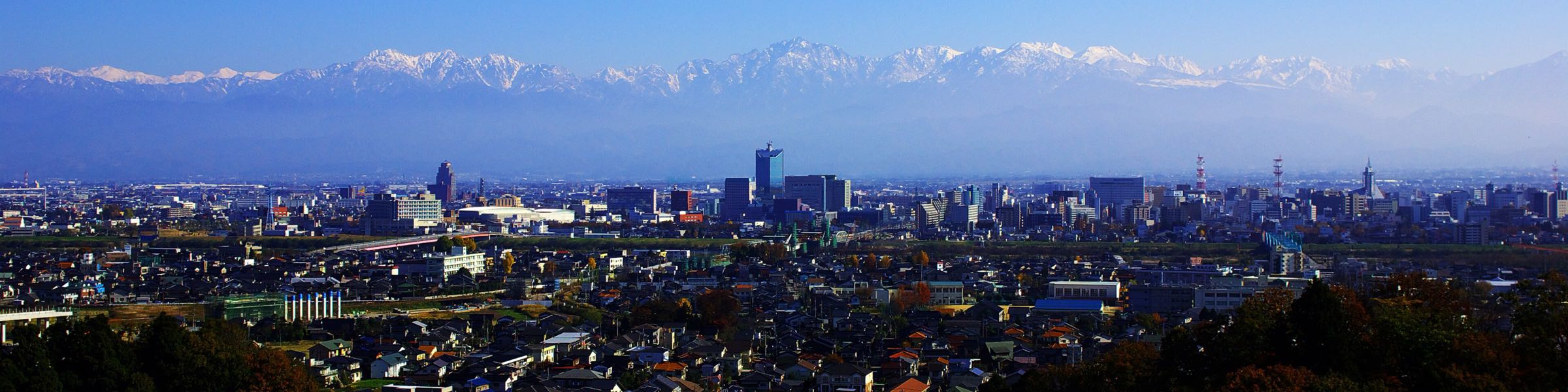
Photo: 名古屋太郎, CC BY-SA 3.0
- Home
- News
- ICS Award History
- ICS 2023 Awards
ICS 2023 Awards
Awards presented at the 19th International Symposium on Carotenoids in Toyama, Japan, 2023.
At the 19th International Symposium on Carotenoids in Toyama City, Japan, the following awards were presented to outstanding carotenoid scientists who have made significant contributions to the carotenoid field.
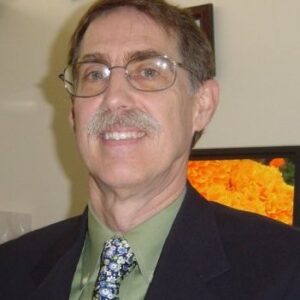
ICS President's Award
Dr. John Landrum
Dr. John Landrum is Professor Emeritus in the Department of Chemistry and Biochemistry of Florida International University where his academic career spanned from 1980 through 2019 when he retired and relocated to Wake Forest, North Carolina. Dr. Landrum completed his B.S. (1975) and M.S. (1978) degrees at California State University at Long Beach and his Ph.D. in Chemistry at the University of Southern California under the mentorship of Professor Christopher Reed. Dr. Landrum has been recognized as a Fellow of the Association for Research in Vision and Ophthalmology and also as a Fellow of The International Carotenoid Society. He earned Awards for Excellence in both Teaching and Research during his years at Florida International University and he served for several years as an Associate Editor for Archives in Research in Biochemistry and Biophysics during which time he shepherded a number of special issues devoted to carotenoids. He is the editor of two volumes on carotenoids; Carotenoids: Physical, Chemical, and Biological Functions and Properties (CRC Press, 2010) and Carotenoids and Retinal Disease (CRC Press, 2014).
Early in his career, Dr. Landrum developed a productive collaboration with Biophysicist Richard Bone identifying and studying the principle components of the macular pigment present in the human retina, lutein and zeaxanthin. This collaboration spanned the next three decades and included mile-stone publications identifying the macular carotenoids, characterizing the stereoisomers of lutein and zeaxanthin in the retina including the discovery that the non-dietary carotenoid R,S-zeaxanthin is a major component, mapping the distribution of the carotenoids within the retina, demonstration that oral supplementation of lutein and zeaxanthin can modify macular pigment levels, study of the age dependence of carotenoid levels in the macular and that macular pigment levels are associated with reduced risk of age-related macular degeneration. Dr. Landrum has been a member of the International Carotenoid Society since its inception and was elected to the ICS Council in 2005. He was also active in the Carotenoid Interactive Research Group serving on its steering committee in the early 2000’s. In January of 2007, Dr. Landrum chaired the GRC on Carotenoids held in Ventura, Ca. He served as Treasurer for ICS from 2005 through 2011 when he began a three year term as President-elect. From 2014 through 2017 he served as President and then as past-President between 2018 through 2021. During his time as a leader on the Council, Dr. Landrum implemented new Society management software improving the Society’s ability to maintain and support its membership and at the 2017 International Symposium on Carotenoids held in Lucerne, Dr. Landrum introduced recognition of accomplished members as Fellows of the International Carotenoid Society, this peer recognition is for members who have made lasting contributions within the field of Carotenoid Science and service to the International Carotenoid Society. During COVID when the 2020 International Symposium in Japan was delayed he played a key role in the successful inauguration of the popular Virtual International Conferences on Carotenoids (VICCs) authoring the program schedule and abstract book. The VICCs provide new opportunities for researchers and their students to share new research contributions especially during years when major Carotenoid Conferences are not scheduled. There have now been three well-attended VICCs that have been especially helpful for young researchers who find travel to international conferences prohibitively expensive.
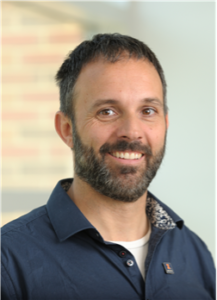
George Britton Young Investigator Award
Dr. Jaume Amengual
Dr. Jaume Amengual is an Assistant Professor of Food Science and Human Nutrition at the University of Illinois Urbana Champaign (US). Prior to that, Dr. Amengual obtained his PhD at the University of the Balearic Islands (Spain) and spent over seven years of training as a Postdoctoral Fellow at the Department of Pharmacology at Case Western University and the Cardiology Department at New York University. Since 2018, Dr. Amengual’s research program focuses on understanding the contribution of provitamin A carotenoids and vitamin A in the regulation of cardiometabolic diseases such as obesity, atherosclerosis, and liver steatosis.
Dr. Amengual serves as a Council Member and Secretary for the International Carotenoid Society (ICS) since 2021 and was elected as a Fellow of the ICS in 2023. He is also a member of the American Heart Association (AHA) – Early Career Committee since 2019. Dr. Amengual is actively involved in mentoring of young scientists in the ICS and AHA communities, and also serves on the editorial board of Nutrients and Frontiers in Cardiovascular Medicine.
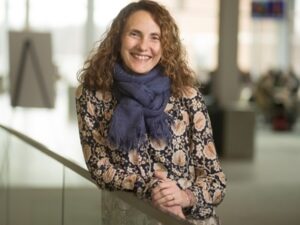
Norman Krinsky Award
Dr. Loredana Quadro
Dr. Loredana Quadro is a Professor of Food Science and member of the Center for Lipid Research and of the Institute for Food, Nutrition and Health at Rutgers University, NJ, USA. Dr. Quadro’s lab is broadly interested in understanding the mechanisms of carotenoids and retinoids (vitamin A and its derivatives) absorption, transport, and metabolism in mammalian tissues. In the past fifteen years, a major focus of her research has been on the maternal-fetal metabolism of vitamin A and its carotenoid precursor β-carotene with the goal of understanding how to prevent or improve congenital defects as well as maternal pathological conditions associated with both the deficiency and excess of the vitamin. Her laboratory has pioneered this field of study by unraveling, for example, the role of maternal circulating β-carotene as an alternative vitamin A source for embryonic synthesis of retinoic acid; the role of β-carotene metabolites (β-apocarotenoids) in regulating transfer of intact β-carotene from the placenta towards the fetus by modulation of placenta lipoprotein biosynthesis; and more recently the function of retinoic acid as a modulator of the fuel source choice in the adult heart.
Dr. Quadro has a sustained record of research productivity and excellence demonstrated by an extensive publication record and continuous national level external funding for her research since 2004. Dr. Quadro serves on the editorial boards of The Journal of Lipid Research, The Journal of Biological Chemistry, and Communications Biology. Throughout these years, Dr. Quadro has had the privilege of serving the carotenoid scientific community by chairing the ASN-RIS Carotenoids And Retinoids Interest Group (CARIG; 2013-14), the J.A. Olson ASN-CARIG Symposium (2014), and various CARIG mini-symposia at the Experimental Biology meetings. In July 2023, she had the honor of delivering the J.A. Olson Memorial Lecture at the 2023 J.A. Olson-CARIG Symposium. Moreover, she was a member of the CARIG steering committee (2009-2014), she was elected Fellow of the International Carotenoids Society (ICS) in 2017, she served as a member of the ICS Council from 2017 to 2023 and chaired the 2023 Carotenoid Gordon Research Conference (GRC) this past January. She has been elected President-elect of the International Carotenoid Society in 2023 (President term 2026-2029).
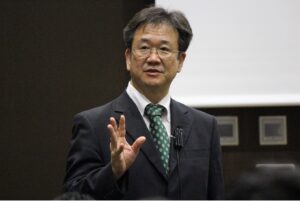
Otto Isler Award
Dr. Hideki Hashimoto
Hideki Hashimoto, born in Kyoto, Japan in 1962, embarked on a remarkable journey in the realm of chemistry. His academic odyssey began with the pursuit of a Ph.D. in Chemistry at Kwansei Gakuin University, culminating in 1990. From there, he embarked on a dynamic career path that led him through various academic institutions and continents. During 1990-1991, Hashimoto’s journey took him to Kwansei Gakuin University as a JSPS fellow. Subsequently, he assumed the role of Assistant Professor at Osaka City University’s Department of Applied Physics, where he devoted his energies from 1991 to 1997. This period marked the early stages of a burgeoning career, laying the foundation for his future achievements. In 1997, Hashimoto’s trajectory led him to Shizuoka University, where he became an Associate Professor in the Department of Materials Engineering. During this chapter of his career, he expanded his horizons further by embarking on visiting associate professorships at both the University of Tokyo’s Physics Department and the University of Glasgow’s Institute for Life Science in Scotland, UK.
In 2002, at the age of 39, Hideki Hashimoto’s journey reached a new milestone as he assumed the role of a full professor at Osaka City University’s Department of Physics. This appointment marked a significant turning point, where he could impart his wealth of knowledge and experience to the next generation of scientists. Notably, since 2010, Hashimoto has served as the project leader of The OCU (Osaka City University) Advanced Research Institute for Natural Science and Technology (OCARINA). His dedication to this endeavor continued until his well-deserved retirement with emeritus professorship honors from Osaka City University in 2015. Post-retirement, Hashimoto’s journey came full circle as he returned to Kwansei Gakuin University in 2015, this time as a full professor in the Department of Applied Chemistry for Environment within the School of Biological and Environmental Sciences. This homecoming marked a rich new phase in his academic voyage.
Throughout his illustrious career, Hashimoto’s primary focus has centered on the intricate study of photosynthesis’ fundamental processes. Employing a diverse array of experimental techniques, ranging from photochemistry to crystallography and ultrafast time-resolved spectroscopy, he has left an indelible mark on the field. One groundbreaking study, published in the Journal of the American Chemical Society in 1993, catapulted Hashimoto into the forefront of carotenoid research. Utilizing time-resolved resonance Raman spectroscopy, he achieved a world-first by capturing the transient Raman spectra of the S1 state of cis-trans isomers of carotenoids. This pivotal discovery illuminated the optical forbidden 2Ag− state of carotenoids’ S1 state, allowing for an unprecedented exploration of excitation energy transfer processes from carotenoids to chlorophylls in photosynthetic light-harvesting complexes.
Today, Hashimoto’s research interests have expanded into the realm of artificial photosynthesis, where he continues to blaze new trails. His contributions are evidenced by the publication of over 400 papers in world-renowned journals, including Science, Physical Review Letters, Angewandte Chemie International Edition, Journal of the American Chemical Society, and Communications Chemistry (A Nature group publishing journal). His remarkable journey has not gone unnoticed, with numerous accolades bestowed upon him, including the BBSRC Japan-UK partnering award, SPACC-CSJ award, and the prestigious Hyogo Science Prize. Hideki Hashimoto’s career has been a testament to dedication, innovation, and a relentless pursuit of scientific excellence on Carotenoid Chemistry.
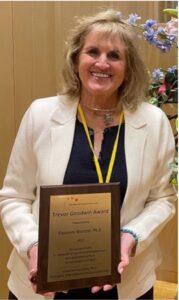
Trevor Goodwin Award
For a lifetime of achievement in research on carotenoid biochemistry
Dr. Eleanore Wurtzel
Dr. Eleanore Wurtzel is Professor and Chair of the Department of Biological Sciences at Lehman College of The City University of New York (CUNY). She is also a member of the Doctoral faculty of the Biochemistry and Biology PhD programs at the CUNY Graduate Center and an Affiliate Scientist at The New York Botanical Garden. The Wurtzel laboratory conducts basic research on provitamin A carotenoid biosynthesis which is enabling sustainable solutions to global vitamin A deficiency.
Dr. Wurtzel began her scientific career as a PhD student of Dr. Masayori Inouye at SUNY Stony Brook where she discovered the first genes encoding two-component signaling, followed by postdocs at Brookhaven National Laboratory and Cold Spring Harbor Laboratory. At Cold Spring Harbor Laboratory, she began her longstanding research on the regulation of carotenoid biosynthesis in maize and other crops, prior to taking a faculty position at Lehman College. By 1993, ideas of solving vitamin A deficiency in the rice-eating world were fueled at an exciting workshop held at the Rockefeller Foundation, where 13 carotenoid biochemists, including Dr. Wurtzel, participated. As Golden Rice was being developed Dr. Wurtzel’s basic research on maize and rice carotenoid biosynthesis was funded by the Rockefeller Foundation, and then by NIH for ~25 years. Since little was known about carotenoid-related genes in plants, her lab used the diverse collections of maize to identify the carotenoid-related genes in the major food crops, and to pinpoint the key genes and gene variants which could be used for improving provitamin A carotenoids in maize and rice. Phytoene synthase was considered the key enzyme for engineering provitamin A. However, Wurtzel’s group discovered that all cereal crops in the grasses had not one, but three genes, each with a dedicated role. Well after the scientific community understood what genes would be needed to create Golden Rice or even Orange Maize, the Wurtzel lab discovered Z-ISO, a new carotenoid enzyme which is essential for biosynthesis of all plant and algal carotenoids, including provitamin A carotenoids. This breakthrough led to discovery of a new prototype function for heme proteins, uncovered a novel means for regulating carotenoid biosynthesis, and redefined the carotenoid biosynthetic pathway in all plants and algae.
Basic research in the Wurtzel lab has provided the knowledge and tools needed to develop healthier crops as sustainable solutions to global food insecurity and vitamin A deficiency. In 2006, Dr. Wurtzel was elected a AAAS Fellow by the American Association for the Advancement of Science and honored for pioneering research on provitamin A carotenoid biosynthesis. In 2012, Dr. Wurtzel was awarded Fellow of ASPB by the American Society of Plant Biologists for distinguished and long-term contributions to plant biology. Dr. Wurtzel was honored as a Fellow of ICS, prior to being awarded the Trevor Goodwin Award. Dr. Wurtzel is active in promoting diversity and gender balance in the scientific community, expanding opportunities for young scientists and facilitating growth of emerging fields of science. In 2022, Dr. Wurtzel completed three volumes of Methods in Enzymology on Carotenoids, with contributions from 55 carotenoid laboratories worldwide, which will be a valuable resource to support emerging areas of carotenoid research for years to come. Dr. Wurtzel served as Vice Chair and Chair of the Gordon Research Conference (GRC) on Carotenoids and founded the GRS Seminar on Carotenoids (2013) for early career scientists. In addition to founding the GRC on Plant Metabolic Engineering, Dr. Wurtzel established the associated GRS Seminar for early career scientists. Dr. Wurtzel organized a Banbury meeting at Cold Spring Harbor laboratory to discuss the potential of applying synthetic biology as a second “Green Revolution” to solve global food demands. Dr. Wurtzel served on the GRC Board of Trustees and as Monitoring Editor for the ASPB journal, Plant Physiology, and currently serves as an Editor-in-Chief for Plant Science.
All awards ICS 2026 Awards ICS 2023 Awards ICS 2017 Awards ICS 2014 Awards ICS 2011 Awards
|
